
Introduction
Shopify vs WordPress is one of the most important decisions when starting an online business. Both platforms are powerful, widely used, and trusted by millions of users around the world. However, they are built with different goals in mind. WordPress is a flexible content management system that can be turned into anything, including an online store, while Shopify is a dedicated eCommerce platform designed specifically for selling products online. This difference plays a big role in how each platform works and what kind of user it is best suited for. In 2026, as online businesses continue to grow rapidly, selecting the right platform can directly impact your success, scalability, and overall user experience. Some people prefer simplicity and ease, while others prefer control and customization. This article provides a detailed comparison of WordPress vs Shopify, helping you understand their strengths and weaknesses so you can choose the platform that aligns with your business goals, technical skills, and long-term vision.
Table of Contents
Overview of WordPress and Shopify
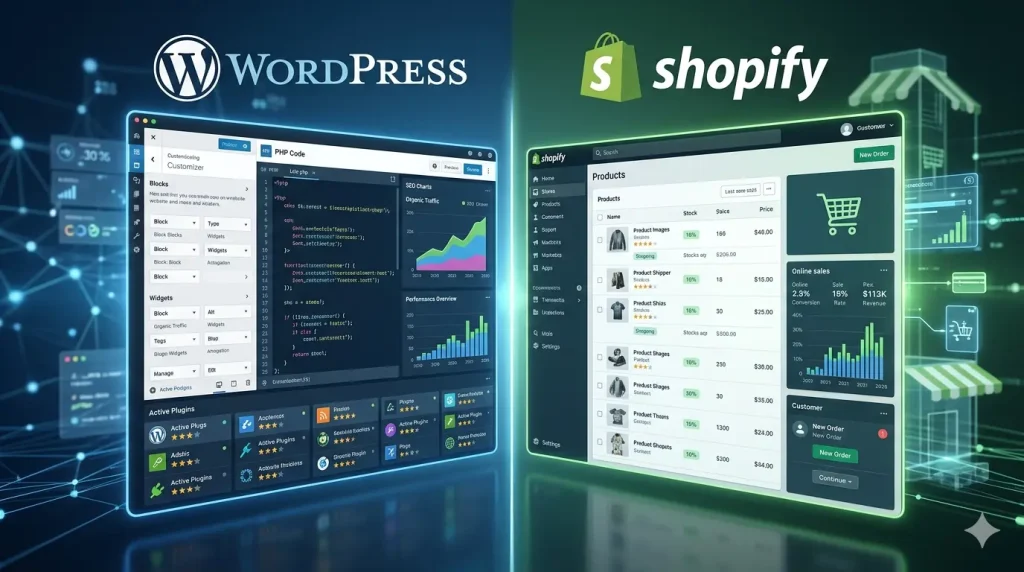
is one of the most popular website-building platforms in the world, known for its flexibility and customization options. It allows users to create blogs, business websites, portfolios, and fully functional eCommerce stores using plugins. One of the most commonly used plugins is , which transforms a simple website into a powerful online store. On the other hand, is a fully hosted eCommerce platform that is specifically designed for online selling. It offers everything in one place, including hosting, security, payment processing, and store management tools. This makes Shopify a convenient option for users who want a quick and simple setup. While WordPress provides more freedom and control, Shopify focuses on ease of use and efficiency. Understanding this basic difference is essential because it helps users decide whether they need a flexible system or a ready-made solution for their online business.
Ease of Use and Setup
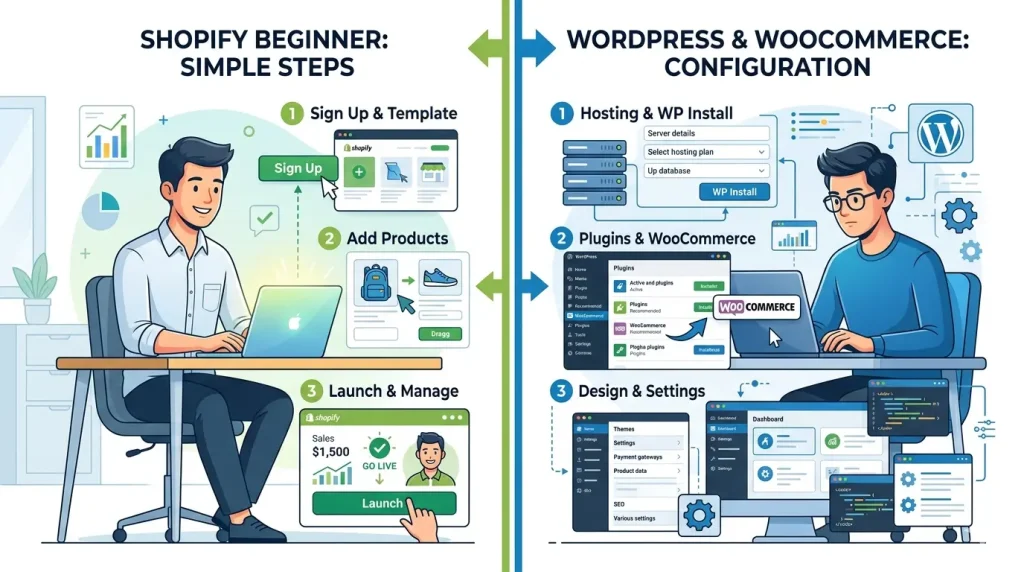
When it comes to ease of use, Shopify clearly stands out as a beginner-friendly platform. It offers a simple signup process, guided setup, and an intuitive dashboard that allows users to create an online store without any technical knowledge. Everything from adding products to setting up payments is straightforward, making it ideal for people who want to launch quickly. In contrast, WordPress requires a more involved setup process. Users need to purchase hosting, install WordPress, and then configure additional plugins such as WooCommerce to enable eCommerce functionality. This process can feel complex for beginners, especially those who have no prior experience with website development. However, once the setup is complete, WordPress becomes easier to manage over time. The learning curve is higher, but it offers more control in the long run. So, while Shopify is perfect for users who want simplicity and speed, WordPress is better suited for those who are willing to invest time in learning and setting up their website properly.

Customization and Flexibility
Customization is one of the strongest advantages of WordPress. It offers thousands of free and paid themes, along with a massive library of plugins that allow users to add almost any feature they want. From design changes to advanced functionality, everything can be customized according to business needs. Developers can even edit the code directly, giving complete control over the website’s structure and appearance. This makes WordPress ideal for businesses that want a unique and highly tailored online presence. Shopify also provides customization options, including themes and apps, but it operates within a more controlled environment. While users can modify designs and add features, there are limitations compared to WordPress. Advanced customization may require knowledge of Shopify’s coding system, which can be a barrier for some users. Overall, Shopify offers enough flexibility for most online stores, but WordPress remains the better choice for those who want complete creative freedom and full control over every aspect of their website.

Pricing and Cost Comparison
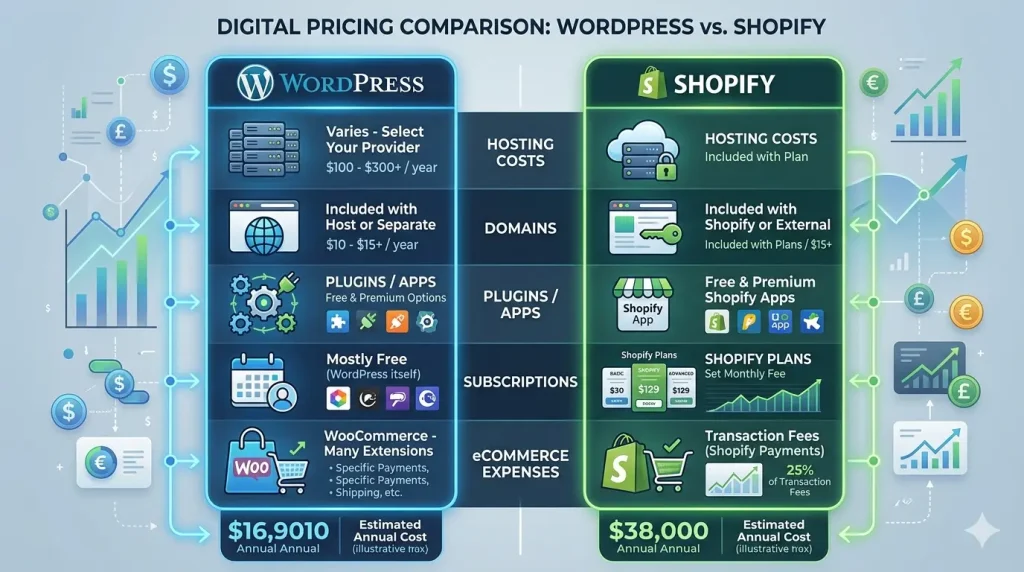
Pricing plays a major role when choosing between WordPress and Shopify. WordPress itself is free to use, but it comes with additional costs such as hosting, domain registration, premium themes, and plugins. These costs can vary widely depending on the features and performance you need. For small websites, WordPress can be quite affordable, but for advanced setups, expenses can increase significantly. Shopify, on the other hand, follows a subscription-based pricing model. It offers different plans that include hosting, security, and essential features in one package. This makes it easier to predict monthly costs and manage expenses. However, Shopify can become more expensive over time, especially when adding paid apps or using third-party payment gateways. The main difference is that WordPress offers flexibility in pricing, while Shopify provides a more structured and predictable cost system. Choosing between the two depends on your budget and how much control you want over your spending.
ECommerce Features and Functionality
Shopify is built specifically for eCommerce, which gives it a strong advantage in terms of built-in features. It includes everything needed to run an online store, such as product management, inventory tracking, payment processing, and shipping integration. These features are ready to use, making it easier for users to manage their business efficiently. WordPress, when combined with WooCommerce, also offers powerful eCommerce capabilities, but they are not built-in by default. Users need to install and configure plugins to achieve the same level of functionality. While this requires extra effort, it also allows for greater customization and flexibility. Businesses can choose exactly which features they want and tailor their store accordingly. Shopify is ideal for users who want an all-in-one solution with minimal setup, while WordPress is better for those who prefer a customizable and scalable eCommerce system.
SEO Capabilities
Search engine optimization is essential for driving traffic and increasing visibility. WordPress is widely considered one of the best platforms for SEO due to its flexibility and powerful plugins. Tools like Yoast SEO allow users to optimize content, meta tags, keywords, and readability with ease. WordPress also provides full control over URLs, site structure, and technical SEO elements, which is important for achieving higher rankings. Shopify also includes built-in SEO features, such as editable meta tags and mobile-friendly design. However, it has some limitations, especially when it comes to URL customization and advanced SEO settings. Despite this, Shopify still performs well for most eCommerce websites. The main difference is that WordPress gives users more control and advanced options, while Shopify offers a simpler but slightly limited SEO experience. For content-heavy websites, WordPress is often the better choice.
Security and Maintenance
Security is a critical aspect of any online platform. Shopify takes care of security automatically, including SSL certificates, updates, and protection against cyber threats. This makes it a stress-free option for users who do not want to handle technical maintenance. WordPress, however, requires users to manage security themselves. This includes installing security plugins, updating themes and plugins, and ensuring the website is protected from potential risks. While this gives more control, it also adds responsibility. If not managed properly, WordPress sites can become vulnerable. However, with the right setup and regular maintenance, WordPress can be just as secure as Shopify. The key difference is convenience versus control.
Conclusion
The comparison of WordPress vs Shopify ultimately comes down to your needs, skills, and business goals. Shopify is a great choice for beginners who want a simple, fast, and reliable eCommerce solution without dealing with technical details. It offers everything in one place, making it easy to launch and manage an online store. On the other hand, WordPress is ideal for users who want full control, advanced customization, and strong SEO capabilities. It requires more effort but provides greater flexibility in the long run. Both platforms are powerful and capable of supporting successful online businesses. The right choice depends on whether you value ease of use or customization and control.
FAQ:
Which platform is easier to use, WordPress or Shopify?
Shopify is easier to use because it has a simple interface and requires no technical setup.
Can WordPress handle large eCommerce stores?
Yes, with proper hosting and optimization, WordPress can handle large and complex online stores
Is Shopify good for SEO?
Yes, Shopify offers good SEO features, but WordPress provides more advanced control and flexibility.
Related post:
- How AI Is Changing Jobs: The Truth About the Future of Work (2026)
- Best ChatGPT Alternatives in 2026 Which AI Chatbot Is Right for You?
- AI in the Workplace 2026: The Ultimate Guide to Generative AI Tools, Business Adoption & the Future of Work
- Future of Artificial Intelligence 2026: Revolutionary Agentic AI, Generative AI, and Technology Advancements
- Top Latest Technology Trends 2026 You Must Know
- best-tech-gadgets-2026
- How AI is Changing Jobs: The Future of Work in the Age of Artificial Intelligence









2 Responses