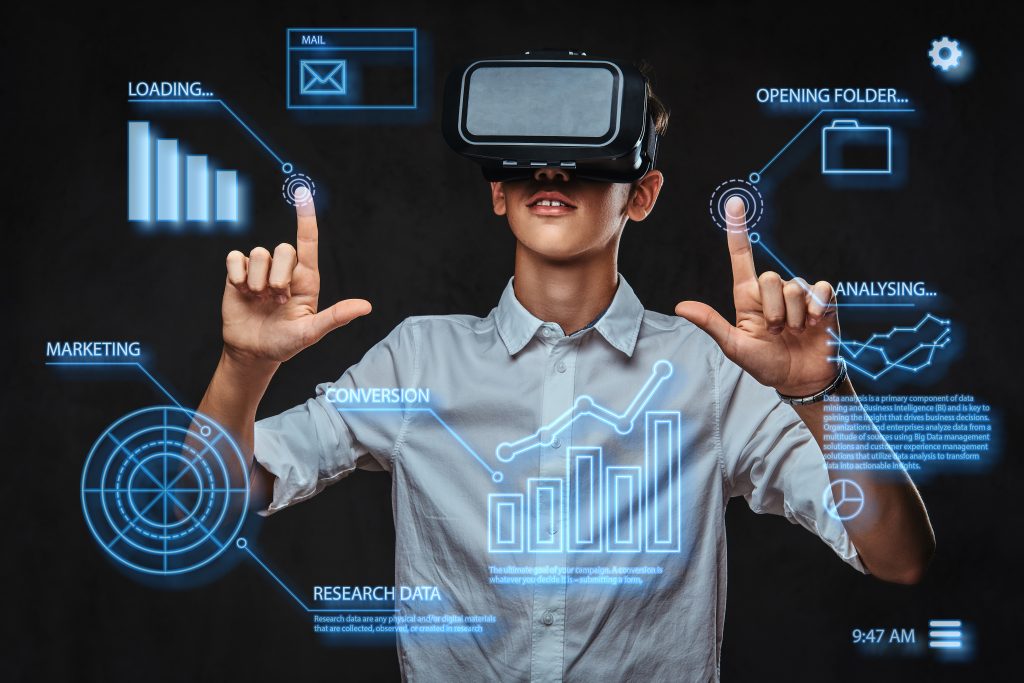
Artificial Intelligence (AI) is no longer a futuristic concept it has become one of the most powerful forces driving digital marketing today. From personalized customer experiences and automated advertising to predictive analytics and AI generated content, businesses across the world are leveraging AI to improve efficiency, increase conversions, and gain a competitive edge.
In 2026, AI has evolved from being a helpful marketing tool into a core component of modern marketing strategies. Companies that embrace AI are experiencing better customer engagement, lower operational costs, faster content production, and improved return on investment (ROI). Meanwhile, businesses that ignore AI risk falling behind competitors who are using intelligent systems to optimize every stage of the customer journey.
The digital marketing landscape has become increasingly complex. Consumers interact with brands across multiple channels, including websites, social media platforms, email campaigns, search engines, and mobile apps. Managing these touchpoints manually is no longer practical. AI helps marketers analyze massive amounts of data, identify patterns, predict customer behavior, and automate repetitive tasks that once consumed valuable time.
This article explores how AI is changing digital marketing, the technologies behind this transformation, real world examples, benefits, challenges, and what the future holds for marketers in an AI driven world.
What Is AI in Digital Marketing?
Artificial Intelligence in digital marketing refers to the use of machine learning, natural language processing, predictive analytics, and automation technologies to improve marketing performance and decision making.
AI systems can analyze customer behavior, identify trends, create content, automate campaigns, optimize advertising, and provide personalized experiences without constant human intervention.
Unlike traditional marketing software that follows fixed rules, AI continuously learns from data and improves its performance over time. This ability allows marketers to make smarter decisions and achieve better results.
Key Technologies Behind AI Marketing
1.Machine Learning
Machine learning enables systems to learn from historical data and make predictions without being explicitly programmed.
Examples include:
- Predicting customer purchases
- Identifying high-value leads
- Forecasting campaign performance
- Detecting customer churn
2.Natural Language Processing (NLP)
NLP helps AI understand and generate human language.
Applications include:
- AI chatbots
- Voice assistants
- Content generation
- Sentiment analysis
3.Predictive Analytics
Predictive analytics uses historical data to forecast future outcomes.
Examples include:
- Customer lifetime value prediction
- Conversion forecasting
- Product demand prediction
4.Computer Vision
Computer vision allows AI to analyze images and videos.
Marketing applications include:
- Visual search
- Image recognition
- Product tagging
- Video analysis
Why AI Is Revolutionizing Digital Marketing
The marketing world generates enormous amounts of data every day. Human marketers cannot manually analyze millions of customer interactions efficiently.
AI solves this challenge by processing large datasets in seconds and identifying valuable insights that would otherwise remain hidden.
1.Faster Decision Making
AI can analyze campaign data instantly and recommend adjustments based on performance metrics.
Instead of waiting days for reports, marketers can make real-time decisions that improve results immediately.
2.Enhanced Customer Experiences
Modern consumers expect personalized experiences.
AI helps businesses deliver:
- Personalized product recommendations
- Customized emails
- Dynamic website content
- Relevant advertisements
This personalization increases customer satisfaction and improves conversion rates.
3.Increased Efficiency
AI automates repetitive marketing tasks such as:
- Email scheduling
- Social media posting
- Lead scoring
- Customer segmentation
As a result, marketing teams can focus on strategy and creativity rather than routine tasks.
4.Improved ROI
AI-driven optimization reduces wasted spending and improves campaign performance.
Businesses can:
- Target the right audience
- Optimize ad budgets
- Increase conversion rates
- Reduce acquisition costs
Top Ways AI Is Changing Digital Marketing
AI Powered Content Creation
Content remains one of the most important aspects of digital marketing.
AI tools now assist marketers in creating:
- Blog posts
- Product descriptions
- Social media content
- Email campaigns
- Advertising copy
Benefits of AI Content Creation
1.Faster Production
AI significantly reduces content creation time.
A blog post that once required several hours can now be drafted within minutes.
2.Content Ideation
AI tools help marketers generate topic ideas based on:
- Search trends
- Audience interests
- Competitor analysis
3.Content Optimization
AI can suggest:
- Keyword placement
- Readability improvements
- SEO enhancements
- Internal linking opportunities
4.Popular AI Content Tools
- ChatGPT
- Claude
- Gemini
- Jasper AI
- Copy.ai
While AI improves efficiency, human oversight remains essential to ensure accuracy, originality, and brand consistency. If you want to go beyond content creation and boost your overall workflow, exploring the best AI productivity tools can help you identify which solutions are the right fit for your marketing team.
AI and Search Engine Optimization (SEO)
SEO has become increasingly sophisticated, and AI is playing a major role in helping businesses improve search visibility.
1.AI Powered Keyword Research
Traditional keyword research often requires hours of analysis.
AI tools can quickly identify:
- High-volume keywords
- Long-tail keywords
- Search intent
- Content gaps
This allows marketers to build more effective content strategies.
2.Content Optimization
AI SEO platforms analyze top-ranking pages and provide recommendations for:
- Heading structure
- Keyword usage
- Semantic relevance
- Content depth
These insights help improve rankings and user experience.
3.Topic Clustering
Search engines increasingly favor websites that demonstrate topical authority.
AI helps marketers create:
- Topic clusters
- Content hubs
- Internal linking structures
This strengthens website authority and improves search visibility.
4.Voice Search Optimization
With the growth of voice assistants, AI helps marketers optimize content for conversational search queries.
Examples include:
- Question-based keywords
- Natural language phrases
- Featured snippets
AI Powered Personalization
Personalization has become one of the most influential factors in customer engagement.
Consumers expect brands to understand their preferences and provide relevant recommendations.
AI makes this possible on a large scale.
Personalized Product Recommendations
AI analyzes:
- Purchase history
- Browsing behavior
- Customer preferences
- Demographic data
It then recommends products that customers are most likely to purchase.
This approach increases:
- Sales
- Average order value
- Customer satisfaction
Personalized Email Marketing
AI enables businesses to send highly targeted emails based on customer behavior.
Examples include:
- Abandoned cart emails
- Product recommendations
- Re-engagement campaigns
- Loyalty offers
Personalized emails often generate significantly higher open and click-through rates than generic campaigns.
Dynamic Website Experiences
AI can modify website content in real time based on visitor behavior.
Different users may see:
- Different product recommendations
- Customized offers
- Personalized landing pages
This creates more relevant experiences and improves conversions.
AI Marketing Automation
Marketing automation has existed for years, but AI has made automation smarter and more effective.
Automated Email Campaigns
AI can determine:
- Optimal send times
- Best-performing subject lines
- Personalized content
This increases engagement and improves campaign performance.
Lead Scoring
AI evaluates leads based on:
- Website behavior
- Engagement history
- Purchase intent
Sales teams can then focus on high-quality prospects most likely to convert.
Customer Journey Automation
AI helps businesses automate entire customer journeys.
Examples include:
- Welcome sequences
- Onboarding campaigns
- Retention programs
- Upsell campaigns
Automation ensures customers receive the right message at the right time.
AI Chatbots and Virtual Assistants
Customer expectations for instant support continue to rise.
AI-powered chatbots provide businesses with 24/7 customer service capabilities.
Benefits of AI Chatbots
1.Instant Responses
Customers receive immediate answers without waiting for human agents.
2.Cost Reduction
Businesses can reduce customer support costs while handling higher inquiry volumes.
3.Lead Generation
Chatbots collect valuable customer information and qualify leads automatically.
4.Improved Customer Experience
Fast and accurate support improves customer satisfaction and retention.
Common Chatbot Applications
- Customer support
- Appointment booking
- Product recommendations
- FAQ assistance
- Lead qualification
Advanced AI chatbots now provide highly natural conversations that closely resemble human interactions.
AI Powered Advertising
Digital advertising has become increasingly data driven.
AI enables marketers to create more effective advertising campaigns through automation and intelligent optimization.
Smart Audience Targeting
AI analyzes vast amounts of user data to identify audiences most likely to convert.
Factors include:
- Interests
- Behavior
- Purchase history
- Demographics
This reduces wasted advertising spend and improves campaign performance.
Automated Bid Management
AI continuously adjusts advertising bids based on performance data.
Benefits include:
- Better ROI
- Lower costs
- Higher conversions
- Improved efficiency
Ad Creative Optimization
AI tests multiple ad variations and identifies the highest-performing combinations of:
- Headlines
- Images
- Videos
- Calls to action
This continuous optimization improves results over time.
Predictive Advertising
AI predicts which users are most likely to take specific actions, allowing marketers to allocate budgets more effectively.
This predictive capability represents one of the biggest advancements in modern advertising.
AI in Social Media Marketing
Social media platforms have become essential marketing channels for businesses of all sizes. Managing multiple platforms manually can be time-consuming, especially when marketers need to create content, schedule posts, analyze engagement, and respond to customer interactions.
AI is simplifying social media management while improving results.
AI Powered Content Planning
AI tools analyze:
- Audience behavior
- Trending topics
- Competitor strategies
- Industry trends
Based on this information, AI suggests content ideas that are more likely to attract engagement.
Marketers can identify what their audience wants before creating content, resulting in higher reach and interaction rates.
Automated Content Scheduling
AI-powered social media tools determine the best times to publish content based on audience activity patterns.
Instead of relying on generic posting schedules, AI ensures content reaches users when they are most active.
Benefits include:
- Higher engagement
- Increased reach
- Better visibility
- Improved audience interaction
Sentiment Analysis
AI can analyze comments, reviews, mentions, and conversations to determine how customers feel about a brand.
This helps businesses:
- Monitor brand reputation
- Identify customer concerns
- Improve customer satisfaction
- Detect emerging trends
Influencer Marketing Optimization
AI helps brands identify influencers whose audiences align with their target market.
Rather than selecting influencers based solely on follower counts, AI evaluates:
- Audience quality
- Engagement rates
- Audience demographics
- Conversion potential
This leads to more successful influencer partnerships.
Predictive Analytics: The Future of Smarter Marketing
One of AI’s most powerful capabilities is predictive analytics.
Predictive analytics allows marketers to forecast future customer behaviors using historical data and machine learning algorithms.
Customer Behavior Prediction
AI can predict:
- Which customers are likely to buy
- Which customers may stop engaging
- Which products customers may prefer
- When customers are likely to purchase
These insights help marketers create highly targeted campaigns.
Churn Prediction
Customer churn can significantly impact business growth.
AI identifies warning signs that indicate customers may leave, allowing businesses to take preventive action through:
- Special offers
- Personalized outreach
- Loyalty programs
- Improved customer support
Sales Forecasting
AI analyzes historical performance and market trends to forecast future sales.
Benefits include:
- Better inventory planning
- Improved budgeting
- More accurate growth projections
- Smarter resource allocation
Customer Lifetime Value Prediction
AI estimates how much revenue a customer may generate over their relationship with a business.
This helps marketers prioritize high-value customers and optimize acquisition strategies.
Benefits of AI in Digital Marketing
The adoption of AI offers numerous advantages for businesses seeking growth and efficiency.
1.Increased Productivity
AI automates repetitive tasks that once consumed significant amounts of time.
Examples include:
- Data analysis
- Reporting
- Email campaigns
- Social media scheduling
Marketing teams can focus on strategic activities instead of routine tasks.
2.Better Customer Experiences
AI enables businesses to provide highly personalized experiences that improve customer satisfaction and loyalty.
Customers receive:
- Relevant recommendations
- Personalized communication
- Faster support
- Tailored content
3.Improved Decision Making
AI provides data-driven insights that reduce guesswork.
Marketers can make informed decisions based on:
- Real-time analytics
- Customer behavior
- Market trends
- Performance metrics
Higher Conversion Rates
Personalized experiences and optimized campaigns often result in higher conversions.
Businesses can attract the right audience and deliver more relevant messages.
Cost Efficiency
Automation reduces operational expenses while improving performance.
Companies can achieve better results without significantly increasing marketing budgets.
Competitive Advantage
Organizations that embrace AI gain access to tools and insights that competitors may not be utilizing effectively.
This advantage becomes increasingly important as AI adoption grows.
Challenges and Risks of AI in Digital Marketing
While AI offers significant benefits, marketers must also address potential challenges.
1.Data Privacy Concerns
AI systems rely heavily on customer data.
Businesses must ensure compliance with privacy regulations and maintain transparency regarding data usage.
Consumers increasingly expect companies to protect their personal information.
2.AI Bias
AI systems learn from existing datasets.
If data contains biases, AI-generated recommendations and decisions may also become biased.
Businesses must regularly monitor AI outputs to ensure fairness and accuracy.
3.Inaccurate Content
AI-generated content may occasionally include:
- Incorrect facts
- Outdated information
- Misleading statements
Human review remains essential before publishing content.
4.Over Reliance on Automation
Automation improves efficiency but should not completely replace human judgment.
Marketing success still requires:
- Creativity
- Emotional intelligence
- Strategic thinking
- Brand storytelling
5.Ethical Concerns
AI-generated content and deep personalization raise ethical questions regarding transparency and consumer trust.
Businesses must use AI responsibly to maintain credibility.
Best AI Marketing Tools in 2026
The AI marketing landscape continues to evolve rapidly.
Below are some of the most influential tools marketers use today.
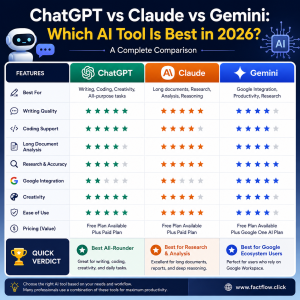
1.ChatGPT
Best for:
- Content creation
- Research
- Brainstorming
- Customer support
Strengths:
- Fast content generation
- Versatile applications
- Natural language responses
2.Claude
Best for:
- Long-form content
- Research summaries
- Detailed analysis
Strengths:
- Strong contextual understanding
- High-quality writing output
3.Google Gemini
Best for:
- Research
- Data analysis
- Google ecosystem integration
Strengths:
- Access to Google’s ecosystem
- Advanced multimodal capabilities
4.Jasper AI
Best for:
- Marketing copywriting
- Advertising content
- Brand messaging
Strengths:
- Marketing-focused templates
- Team collaboration features
5.Surfer SEO
Best for:
- Content optimization
- SEO analysis
- Ranking improvements
Strengths:
- Data-driven SEO recommendations
- Content scoring
6.Semrush AI Tools
Best for:
- Keyword research
- Competitive analysis
- SEO strategy
Strengths:
- Comprehensive SEO insights
- Market intelligence
7.HubSpot AI
Best for:
- CRM automation
- Lead management
- Marketing workflows
Strengths:
- Powerful automation
- Customer journey optimization
Real World Examples of AI in Marketing
Many global brands have successfully integrated AI into their marketing strategies.
1.Amazon
Amazon uses AI extensively for product recommendations.
Its recommendation engine analyzes:
- Browsing history
- Purchase history
- Product interactions
These recommendations drive a significant portion of Amazon’s sales.
2.Netflix
Netflix uses AI to recommend shows and movies based on viewing behavior.
The platform continuously learns from user preferences, improving recommendation accuracy over time.
This personalization keeps users engaged and reduces churn.
3.Spotify
Spotify leverages AI to create personalized playlists and music recommendations.
Features like Discover Weekly demonstrate how AI can deliver highly tailored experiences.
4.Coca Cola
Coca-Cola uses AI for:
- Consumer insights
- Campaign optimization
- Customer engagement
AI helps the company understand changing consumer preferences and create more effective marketing campaigns.
5.Nike
Nike uses AI to analyze customer behavior and provide personalized shopping experiences.
Its data-driven approach helps improve customer satisfaction and increase conversions.
The Future of AI in Digital Marketing
The influence of AI on digital marketing will continue to expand over the coming years. Keeping up with the latest artificial intelligence news and industry developments is increasingly important for marketers who want to stay ahead of what’s coming next.
Several emerging trends are expected to reshape the industry.
1.AI Marketing Agents
AI agents represent the next evolution of marketing automation.
These systems can:
- Plan campaigns
- Create content
- Analyze performance
- Optimize strategies
with minimal human intervention.
2.Hyper Personalization
Future AI systems will deliver even more personalized experiences.
Brands will be able to tailor:
- Websites
- Emails
- Advertisements
- Product recommendations
to individual users in real time.
3.AI Video Generation
Video marketing is becoming increasingly important.
AI tools now generate:
- Marketing videos
- Product demonstrations
- Social media content
- Personalized video campaigns
Businesses can produce professional videos faster and at lower costs.
4.Voice Search Growth
As voice assistants become more popular, marketers must optimize content for conversational search.
AI will play a major role in understanding and responding to voice-based queries.
5.Multimodal Marketing
Future AI systems will combine text, images, video, audio, and data analysis into unified marketing strategies.
This will create richer and more engaging customer experiences.
6.Predictive Customer Journeys
AI will anticipate customer needs before they arise.
Businesses will proactively provide recommendations, offers, and support based on predicted behavior patterns.
Will AI Replace Digital Marketers?
A common concern among professionals is whether AI will replace digital marketers.
The short answer is no.
AI will transform marketing jobs, but it is unlikely to eliminate the need for human marketers. To understand exactly which roles are most at risk and which human skills remain irreplaceable, it is worth reading a deeper look at how AI is changing jobs and the future of work.
What AI Can Do
AI excels at:
- Data analysis
- Automation
- Content generation
- Pattern recognition
- Campaign optimization
What Humans Do Better
Humans remain superior in:
- Creativity
- Emotional storytelling
- Strategic thinking
- Brand development
- Relationship building
AI lacks genuine human emotions, cultural understanding, and creative intuition.
The Future: Human + AI Collaboration
The most successful marketers will combine human creativity with AI efficiency.
Instead of replacing marketers, AI acts as a powerful assistant that enhances productivity and decision-making.
Businesses that integrate both human expertise and AI capabilities will achieve the best results.
Frequently Asked Questions
How is AI used in digital marketing?
AI is used for content creation, SEO optimization, personalization, marketing automation, predictive analytics, customer support, and advertising optimization.
What are the benefits of AI in marketing?
AI improves efficiency, personalization, customer engagement, ROI, decision-making, and campaign performance.
Can AI replace digital marketers?
No. AI can automate tasks and provide insights, but human creativity, strategy, and emotional intelligence remain essential.
Which AI tools are best for marketers?
Popular tools include ChatGPT, Claude, Gemini, Jasper AI, Surfer SEO, Semrush, and HubSpot AI.
How does AI improve SEO?
AI assists with keyword research, content optimization, topic clustering, competitor analysis, and search intent understanding.
Is AI marketing suitable for small businesses?
Yes. AI tools help small businesses automate tasks, improve productivity, reduce costs, and compete more effectively.
What is the future of AI in marketing?
The future includes AI agents, hyper personalization, predictive customer journeys, advanced automation, and AI generated multimedia content.
Conclusion
Artificial Intelligence is fundamentally transforming digital marketing in 2026. From content creation and SEO optimization to customer personalization, predictive analytics, and automated advertising, AI is reshaping how businesses connect with their audiences.
Organizations that embrace AI gain significant advantages in efficiency, scalability, and customer engagement. By automating repetitive tasks and providing data driven insights, AI enables marketers to focus on strategy, creativity, and relationship building.
However, AI is not a replacement for human marketers. The most successful marketing strategies will combine the analytical power of AI with human creativity and emotional intelligence.
As technology continues to evolve, AI will become even more integrated into every aspect of digital marketing. Businesses that adapt early and use AI responsibly will be better positioned to thrive in the increasingly competitive digital landscape.
The future of marketing is not human versus AI it is human and AI working together to create smarter, more personalized, and more effective customer experiences.