If you run a business with a physical location or a defined service area — a dentist, a plumber, a coffee shop, a law firm — most of your new customers are finding you through a search that starts with intent, not a brand name. Someone types “emergency plumber near me” or “best coffee shop downtown,” and Google decides who shows up first. That decision is driven by local search optimization, and getting it right is often the highest-leverage marketing work a local business can do.
This guide walks through what local search optimization actually is, how Google decides local rankings, and the specific steps you can take this week to start climbing the map pack.
Quick Answer: Local search optimization is the process of improving your business’s visibility in location-based search results — primarily Google’s local pack, Maps, and organic results for “near me” and city-specific queries. It centers on three pillars: a fully optimized Google Business Profile, consistent business information across the web (citations), and genuine relevance signals like reviews, local content, and local links.
What Is Local Search Optimization?
Local search optimization (often shortened to “local SEO“) is a specialized branch of search engine optimization focused on improving visibility for searches that have local intent. That intent can be explicit — “plumber near me” — or implicit, where Google infers a local result is what the searcher wants even without the word “near me” in the query, such as “plumber” typed by someone standing in a specific city.
Unlike traditional SEO, which competes for rankings across an entire country or the world, local search optimization competes within a geographic radius — sometimes just a few miles. That changes the strategy considerably. A business doesn’t need to outrank every plumbing company in the country, only the handful of competitors serving the same neighborhood.
Where Local Search Results Appear
- The Local Pack (Map Pack): The block of three business listings with a map that appears near the top of results for local queries.
- Google Maps: The dedicated Maps interface, where users browse and filter local businesses directly.
- Organic Local Results: Standard blue-link results that Google localizes based on searcher location, even without an explicit map pack.
- AI Overviews and Voice Assistants: Increasingly, local recommendations are surfaced directly in AI-generated summaries and spoken responses from voice assistants, which pull heavily from Google Business Profile data and reviews.
Key Takeaways
- Local rankings are driven primarily by relevance, distance, and prominence — Google’s own stated ranking factors for local results.
- A complete, active Google Business Profile is the single most important asset in local search optimization.
- Consistent NAP (Name, Address, Phone) information across directories builds trust signals that support rankings.
- Reviews — both volume and how you respond to them — directly influence both rankings and conversion.
- Local content and locally relevant backlinks separate businesses that dominate their area from those that merely exist in it.
Table of Contents
How Google Ranks Local Results
Google has been explicit that local ranking depends on three main factors, and understanding how they interact is the foundation of any local strategy.
| Factor | What It Means | What Influences It |
|---|---|---|
| Relevance | How well a business matches what the searcher is looking for | Business categories, description, services listed, on-site content |
| Distance | How far each potential result is from the location term used in the search | Verified business address, service area settings |
| Prominence | How well-known and well-regarded the business is, online and offline | Reviews, links, citations, press mentions, overall domain authority |
Distance is the one factor you can’t directly optimize — you can’t move your storefront to rank for a neighborhood across town. That’s exactly why relevance and prominence matter so much: they’re the levers you actually control, and strong performance on both can help a business outrank a closer but less established competitor.
Google Business Profile Optimization
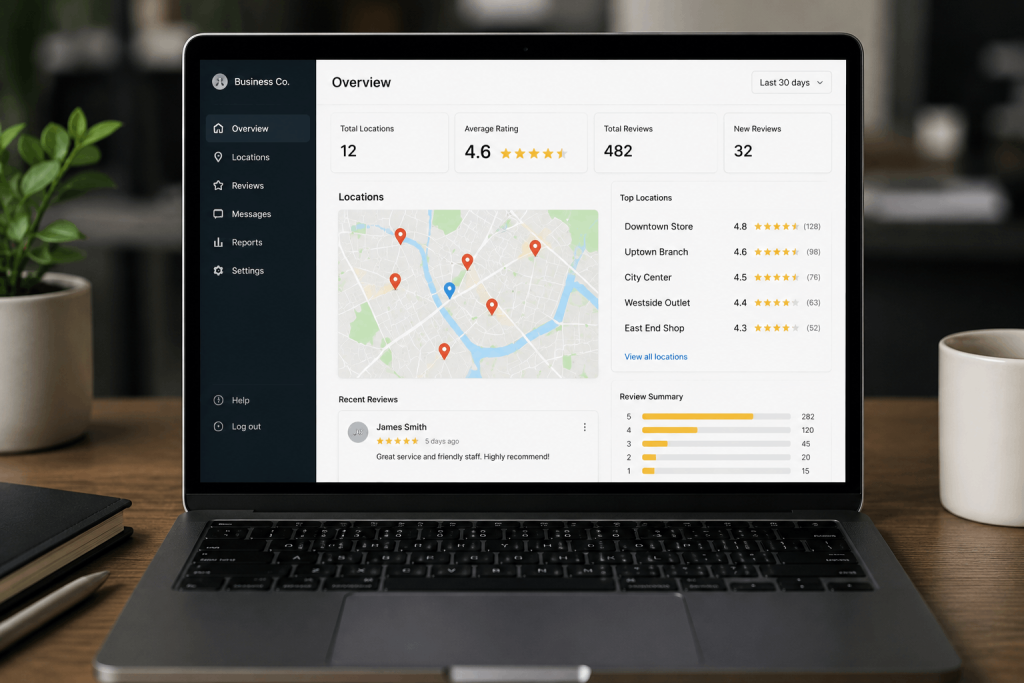
Your Google Business Profile (GBP), formerly Google My Business, is the backbone of local search optimization. It’s the listing that appears in the map pack, in Maps, and in the knowledge panel when someone searches your business name directly.
Step-by-Step: Setting Up a Strong Profile
- Claim and verify your listing. Unverified or unclaimed profiles rarely rank and can be edited by anyone.
- Choose the most specific primary category available. “Italian Restaurant” outperforms the generic “Restaurant” if it’s accurate.
- Add secondary categories for every relevant service, without stretching into services you don’t actually offer.
- Write a complete business description that naturally reflects what you do and where you do it — avoid keyword stuffing.
- Set accurate hours, including holiday hours, and keep them updated.
- Upload real, high-quality photos of your location, team, and work — profiles with more photos tend to earn more engagement.
- Enable messaging and Q&A and monitor them actively.
- Post updates regularly using the Google Posts feature to show ongoing activity.
NAP Consistency and Local Citations
A citation is any online mention of your business’s Name, Address, and Phone number (NAP) — on directories like Yelp, industry-specific listings, chambers of commerce, and data aggregators. Inconsistent information across these citations (a wrong suite number, an old phone number, “St.” in one place and “Street” in another) creates confusion for both users and Google’s algorithms, and can quietly suppress rankings.
Best Practices for Citations
- Audit existing citations for inconsistencies before building new ones.
- Use the exact same NAP format everywhere — pick one and stick to it.
- Prioritize industry-relevant and location-relevant directories over generic, low-quality ones.
- Update every citation immediately if you move, rebrand, or change phone numbers.
On-Page Local SEO
Your website still matters. Google cross-references what your Business Profile says with what your website says, and a well-optimized site reinforces relevance.
- Location pages: If you serve multiple cities or neighborhoods, create a unique, genuinely useful page for each — not a template with the city name swapped out.
- Localized title tags and headers: Naturally include your service and location, e.g., “Emergency Plumber in [City] | 24/7 Service.”
- Embedded Google Map: Adds a clear geographic signal and helps users.
- Local content: Blog posts about local events, projects, or community involvement build topical and geographic relevance over time.
Reviews and Reputation Management
Reviews influence prominence, and they influence conversion — a searcher comparing three nearby options will almost always favor the one with stronger, more recent reviews.
Building a Sustainable Review Strategy
- Ask happy customers directly, at the moment satisfaction is highest.
- Make it easy — a direct review link removes friction.
- Respond to every review, positive and negative, professionally and promptly.
- Never buy fake reviews or offer incentives in exchange for reviews — this violates Google’s policies and risks profile suspension.
Local Link Building
Backlinks from other local, relevant websites — a local news site, a chamber of commerce, a community sponsorship page — carry outsized value for local prominence compared to generic national links.
Practical Local Link Opportunities
- Sponsor local events, sports teams, or charities (most will link back).
- Join your local chamber of commerce or business association.
- Pursue coverage from local news outlets and community blogs.
- Partner with complementary local businesses for cross-promotion.
Local Schema Markup
Structured data (schema.org markup) helps search engines understand your business details unambiguously. For local businesses, LocalBusiness schema — including name, address, phone, hours, and geo-coordinates — is a technical best practice that supports rich results and clearer indexing, even though it isn’t a guaranteed ranking shortcut on its own.
Pros & Cons of Prioritizing Local Search Optimization
| Pros | Cons |
|---|---|
| Highly cost-effective compared to broad national SEO or paid ads | Requires ongoing maintenance (reviews, posts, citation accuracy) |
| Captures high-intent, ready-to-buy searchers | Results build gradually, not overnight |
| Builds compounding trust and visibility over time | Vulnerable to competitor spam listings and review manipulation if unmonitored |
Common Mistakes in Local Search Optimization
- Leaving the Google Business Profile incomplete or outdated.
- Inconsistent NAP information across directories.
- Ignoring or deleting negative reviews instead of addressing them.
- Creating thin, duplicate location pages instead of unique, useful ones.
- Using a virtual office or P.O. box address, which violates Google’s guidelines for most business types.
- Treating local SEO as a one-time setup instead of an ongoing process.
Local Search Optimization Checklist
- ☐ Google Business Profile claimed, verified, and fully completed
- ☐ Correct primary and secondary categories selected
- ☐ NAP consistent across website and all directories
- ☐ Location-specific pages created for each service area
- ☐ Active review generation process in place
- ☐ All reviews responded to
- ☐ LocalBusiness schema implemented on the website
- ☐ At least a few high-quality local backlinks or citations earned
- ☐ Regular Google Posts and photo updates scheduled
Frequently Asked Questions
What is the difference between local SEO and regular SEO?
Regular SEO targets rankings across broad, often national or global search results, while local search optimization targets rankings within a specific geographic area, relying heavily on Google Business Profile signals, citations, and location-based relevance.
How long does local search optimization take to work?
Timelines vary by competition and starting point, but many businesses see measurable movement within a few months of consistent effort, with stronger results compounding over six to twelve months.
Do I need a physical storefront to rank locally?
No. Service-area businesses without a public-facing storefront can still create and optimize a Google Business Profile by defining their service area and hiding their address, as long as they meet Google’s eligibility guidelines.
How many reviews do I need to rank well?
There’s no fixed number. What matters more is a steady, ongoing stream of recent, genuine reviews rather than a one-time spike, along with a strong average rating.
Does posting on social media help local SEO?
Social media doesn’t directly influence local rankings, but it supports prominence indirectly by driving engagement, brand searches, and potential local links.
Can I optimize for multiple locations with one website?
Yes, by creating a unique, genuinely useful page for each location rather than duplicating the same content with the city name changed.
What is NAP consistency and why does it matter?
NAP consistency means your business Name, Address, and Phone number match exactly across your website and every online directory, which builds trust and reduces confusion for search engines and users alike.
Is a P.O. box acceptable for a Google Business Profile?
No. Google requires a real physical address for verification, even if that address isn’t displayed publicly for service-area businesses.
How do I handle a negative review?
Respond promptly and professionally, acknowledge the concern without being defensive, and take the conversation offline when possible to resolve it directly.
What’s the fastest way to improve local rankings right now?
Auditing and completing your Google Business Profile fully, and fixing any NAP inconsistencies, typically delivers the fastest visible impact.
Conclusion
Local search optimization isn’t a one-time project — it’s an ongoing discipline built on three things: making sure Google fully understands who you are and where you operate, making sure that information is consistent everywhere it appears, and making sure real customers keep vouching for you through reviews and engagement. Businesses that treat it this way, rather than a quick setup task, are the ones that consistently show up when their next customer searches.
Ready to see where you stand? Start with the checklist above, fix your Google Business Profile first, and revisit your local rankings in 30 days.