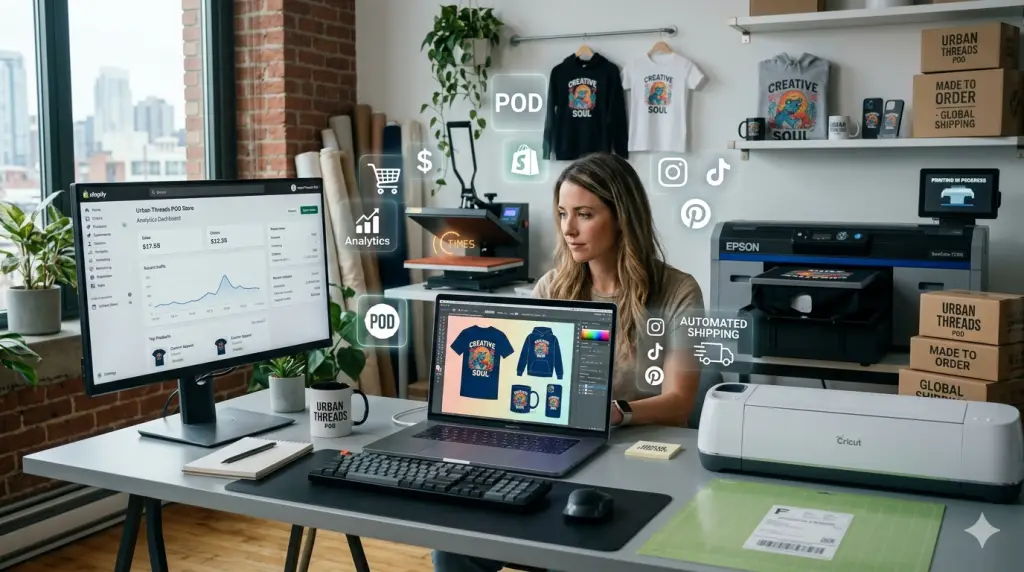
A print on demand business is one of the most beginner-friendly ways to start selling online today.You do not need to buy stock in advance, rent a storage space, or invest thousands of dollars before making your first sale. Instead, you create custom designs and place them on products like t-shirts, mugs, phone cases, and hoodies. A third-party supplier prints and ships each item only when a customer places an order.
This model has become incredibly popular among entrepreneurs, artists, and content creators because of its low barrier to entry and flexible nature. You can run it from anywhere in the world, manage it in your spare time, and scale it as large as you want without the complexities of traditional product businesses.
This article covers everything you need to know about starting and growing a print on demand business, from choosing your niche and designing your products to marketing your store and increasing your profits. If you have been thinking about starting a POD business, this guide will give you a clear and practical roadmap to follow.
Table of Contents
What Is a Print on Demand Business and How Does It Work?
Print on demand, often shortened to POD, is a business model where you sell custom-designed products without holding any physical inventory. When a customer visits your online store and purchases an item, the order is automatically sent to a print on demand supplier. The supplier then prints your design onto the product, packages it, and ships it directly to the customer on your behalf.
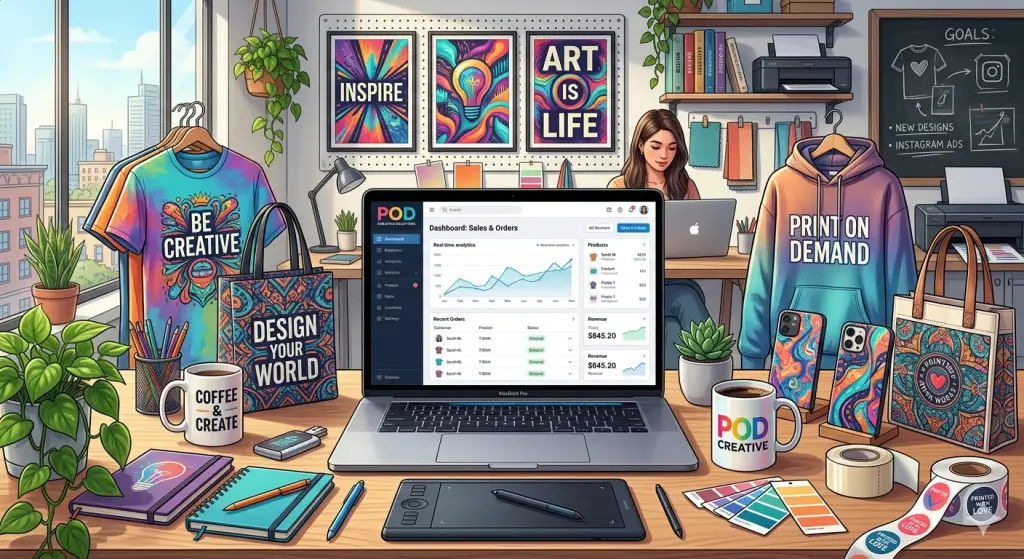
You pay the supplier’s base price for each item sold, and you keep the difference between that price and what you charged the customer. For example, if a supplier charges you twelve dollars for a printed t-shirt and you sell it for twenty-eight dollars, your profit per sale is sixteen dollars before any marketing costs.
The most popular products in the print on demand space include:
- T-shirts, hoodies, and sweatshirts
- Mugs, water bottles, and tumblers
- Phone cases and laptop sleeves
- Tote bags, backpacks, and accessories
- Posters, canvas prints, and wall art
- Pillows, blankets, and home decor items
The print on demand model removes nearly all the traditional risks of starting a product business. There is no upfront inventory cost, no risk of unsold stock, and no need to deal with packaging or logistics. Your role is to create designs, build a store, and drive traffic. Everything else is handled by your POD supplier.
Choose a Profitable Niche for Your Print on Demand Store
One of the most important decisions you will make when starting a print on demand business is choosing your niche. A niche is a specific group of people with shared interests, hobbies, values, or identities that your products are designed for. Trying to sell to everyone is one of the most common mistakes new POD sellers make, and it almost always leads to poor results.
A focused niche allows you to create designs that feel personal and relevant to a specific audience. When someone who loves hiking sees a t-shirt that speaks directly to their passion, they are far more likely to buy it than if they see a generic outdoor design. The more specific your niche, the more connected your audience will feel to your products.
Some of the most profitable niches in print on demand include:
- Pet owners: dog breeds, cat lovers, and exotic pet enthusiasts
- Professions and occupations: nurses, teachers, engineers, and firefighters
- Hobbies: fishing, gardening, gaming, yoga, and cooking
- Family and relationships: new moms, grandparents, siblings, and couples
- Causes and identities: environmental awareness, pride communities, and cultural pride
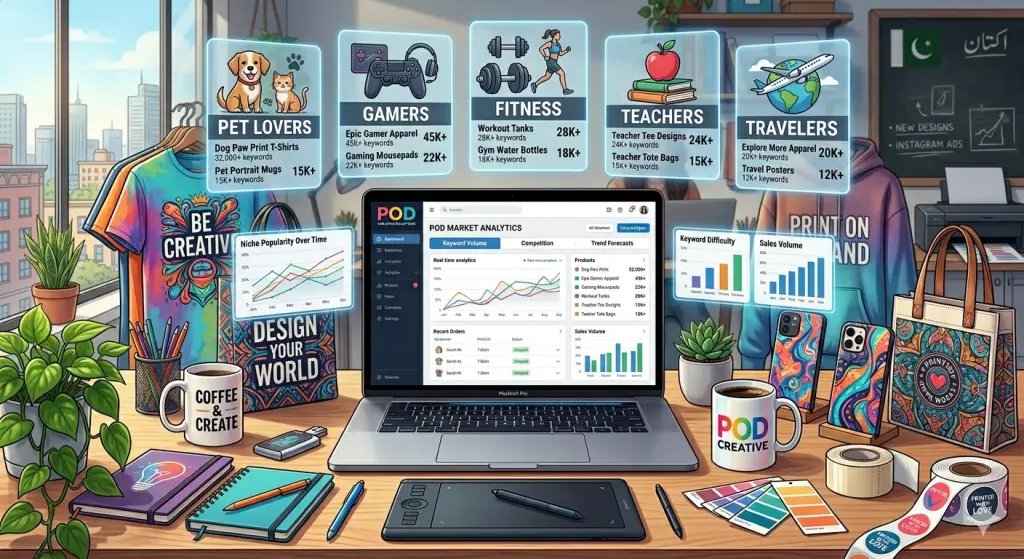
When evaluating a niche, ask yourself whether the audience is passionate enough to spend money on merchandise, whether there is enough demand to sustain a business, and whether you can create designs that truly resonate with that group. Use tools like Google Trends, Etsy search, and Amazon Best Sellers to validate your niche before investing time in building your store.
Pick the Right Print on Demand Platform and Supplier
Your choice of print on demand platform and supplier will directly affect your product quality, shipping times, profit margins, and customer satisfaction. Spend time comparing your options before committing to one, because changing suppliers later can be disruptive once your store is up and running.
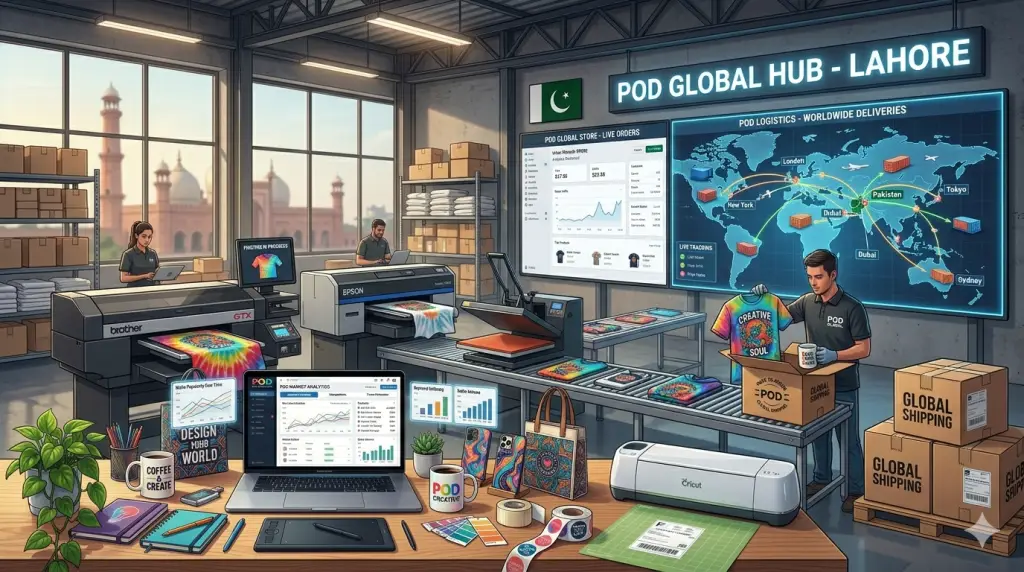
Some of the most widely used and trusted print on demand suppliers are:
- Printful: One of the most popular suppliers worldwide, known for high print quality, a large product catalog, and reliable fulfillment. It integrates easily with Shopify, Etsy, WooCommerce, and other platforms.
- Printify: Offers a large network of print providers in multiple countries, which gives you more flexibility with pricing and shipping times. Best for sellers who want lower base costs.
- Redbubble and Merch by Amazon: Marketplace-style platforms where you upload designs and they handle everything including the store, payments, and shipping. Less control but easier to start.
- Gelato: A strong option for sellers targeting international customers, with print facilities in over thirty countries for faster local shipping.
When choosing a supplier, consider product quality and print consistency, base pricing and how it affects your margins, shipping speed and costs to your target markets, integration options with your store platform, and the quality of their customer support.
Always order sample products before you start selling. This lets you check the print quality, color accuracy, fabric feel, and packaging firsthand. Selling products you have personally reviewed builds confidence in your business and helps you describe them accurately to customers.
Create Designs That Sell and Stand Out
In a print on demand business, your designs are your products. No matter how good your supplier is or how well you market your store, weak designs will not convert into sales. Great design does not have to be complicated, but it does need to be relevant, well-executed, and appealing to your target audience.
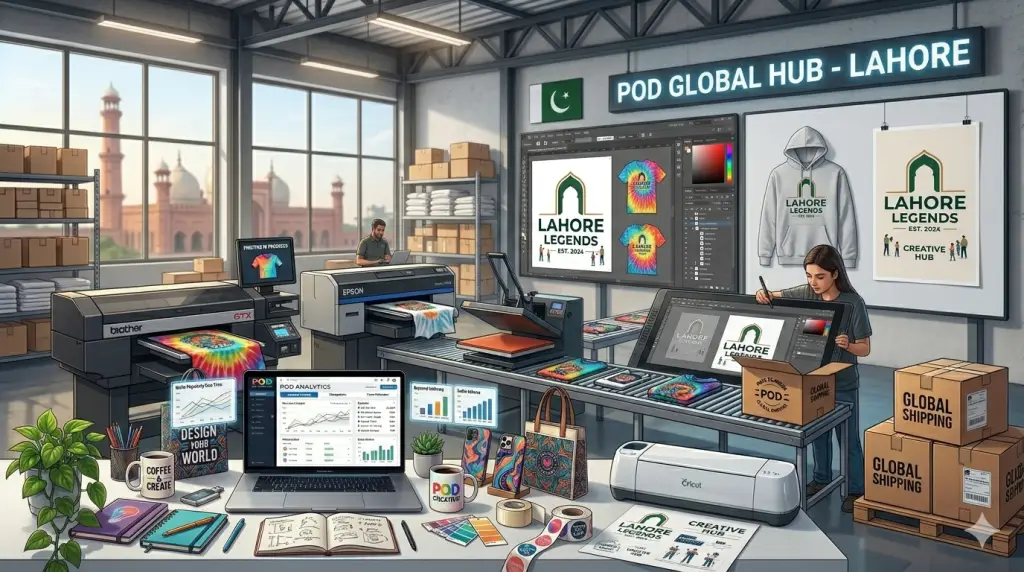
You do not need to be a professional graphic designer to create successful POD designs. Many top-selling designs are actually quite simple: a bold quote, a minimal icon, or a clean illustration. What matters most is that the design connects with the right audience emotionally. A funny quote that makes a nurse laugh is more valuable than a technically perfect piece of art that does not resonate with anyone.
Tools you can use to create print on demand designs include:
- Canva: Free and easy to use, great for text-based and simple graphic designs
- Adobe Illustrator: Professional vector design software for more advanced creations
- Procreate: Popular iPad app for hand-drawn and illustrated designs
- Creative Fabrics or Creative Market: Platforms where you can purchase ready-made graphics and fonts for commercial use
Always create your designs in high resolution, typically 300 DPI or higher, to ensure prints look sharp and professional. Check your supplier’s specific file requirements for dimensions and format before uploading. Most suppliers recommend PNG files with a transparent background for apparel designs.
Research what is already selling in your niche by browsing Etsy, Redbubble, and Amazon Merch. Look for patterns in popular designs and use that knowledge as inspiration without copying. Your goal is to understand what works and then create something original that fits the same audience needs.
Set Up Your Online Store and Product Listings
Once you have your niche, supplier, and designs ready, it is time to build your store and list your products. You have two main options when it comes to where you sell: your own independent store or an existing marketplace.

Selling on your own store through platforms like Shopify or WooCommerce gives you full control over your branding, pricing, and customer relationships. You keep a higher percentage of each sale and can build a long-term brand. The downside is that you are responsible for driving all your own traffic through marketing.
Selling on marketplaces like Etsy or Amazon gives you immediate access to an existing audience of buyers. These platforms already get millions of visitors every day, so your products can be discovered without as much marketing effort. However, they charge fees on every sale and you have less control over how your brand is presented.
For most beginners, starting on Etsy while building your own Shopify store in parallel is a popular and effective strategy. Etsy gives you early sales and validation, while your own store builds long-term brand equity.
When creating product listings, pay attention to the following:
- Use clear, keyword-rich product titles that describe exactly what you are selling
- Write detailed product descriptions that explain the design, material, sizing, and care instructions
- Use high-quality mockup images that show how the product looks when worn or used
- Price your products competitively while ensuring enough margin to cover costs and remain profitable
Market Your Print on Demand Business to Drive Sales
A print on demand store without traffic will never make sales, no matter how great the designs are. Marketing is what brings people to your store, and the right marketing strategy depends on your budget, your niche, and where your target audience spends their time online.
Social media marketing is one of the most effective and affordable ways to promote a POD business. Instagram and Pinterest are particularly powerful for visual products because you can showcase your designs in a way that naturally attracts attention. Post regularly, use relevant hashtags, and engage with your audience consistently. TikTok has also become a major platform for POD sellers, with many creators going viral simply by showing behind-the-scenes content of their business or their designs.
Search engine optimization is essential if you are selling on Etsy or running your own store. Research the keywords your target buyers use when searching for products like yours, and include those keywords naturally in your titles, descriptions, and tags. Good SEO takes time to build but delivers free, consistent traffic over the long term.
Paid advertising through Facebook Ads, Instagram Ads, or Pinterest Ads can accelerate your growth if you have a budget to work with. Start with a small daily budget, test different ad creatives and audiences, and scale the ads that bring profitable results. Always track your return on ad spend closely so you know which campaigns are worth continuing.
Influencer marketing is another channel worth exploring, especially for niche products. Find micro-influencers in your niche with engaged followings and offer them free products in exchange for honest reviews or posts. Even a small mention from the right creator can send significant traffic to your store.
Scale Your Print on Demand Business for Long-Term Growth
Once your print on demand business starts generating consistent sales, the next step is scaling it. Scaling means growing your revenue without proportionally increasing your workload. This is where the POD model truly shines, because the fulfillment side is already automated, meaning you can add more products and reach more customers without adding operational complexity.
Start by expanding your product range within your existing niche. If you are selling dog lover t-shirts, add mugs, phone cases, and tote bags with the same designs. This increases your average order value and gives your existing customers more ways to buy from you.
Analyze your bestselling designs and double down on what is working. Create variations of your top performers, such as different color options, different product types, or slightly updated versions of the same concept. This is much more effective than constantly creating entirely new designs.
Build an email list from your customers and website visitors. Email marketing has one of the highest returns on investment of any digital marketing channel. Use it to promote new designs, run seasonal sales, and reward loyal customers with exclusive discounts.
As you scale, consider expanding into new niches or sub-niches that are adjacent to what you already do. If your dog lover store is performing well, consider adding a cat lover line or a pet owner general merchandise collection. Growth comes from both deepening your existing niche and carefully expanding into new ones over time.
Frequently Asked Questions (FAQs)
Q1. How much money do I need to start a print on demand business?
One of the biggest advantages of the print on demand model is that you can start with very little money. If you use a free design tool like Canva and sell on a marketplace like Etsy, your main upfront costs are the Etsy listing fees, which are just twenty cents per listing. If you want to build your own Shopify store, you will need to pay for a monthly subscription starting around twenty-five to thirty-nine dollars.
The main optional cost is ordering samples from your supplier to check quality, which might cost fifty to one hundred dollars depending on how many products you test. Overall, you can realistically launch a print on demand business for under one hundred dollars, making it one of the most affordable online business models available.
Q2. Do I need design skills to run a successful print on demand store?
You do not need to be a professional designer to run a successful print on demand business. Many bestselling POD products feature simple text-based designs that anyone can create using free tools like Canva. What matters more than technical skill is understanding your audience and knowing what kind of designs they will connect with emotionally.
That said, if you want more complex or unique designs and do not have design experience, you can hire freelance designers on platforms like Fiverr or Upwork at very reasonable rates. Many successful POD sellers outsource their design work and focus their time on marketing and business strategy instead.
Q3. How long does it take to make money with print on demand?
The timeline for making money with print on demand varies widely depending on your niche, marketing effort, and the quality of your designs. Some sellers make their first sale within the first week, especially if they are selling on a marketplace like Etsy where organic traffic is already available. Others may take two to three months to find their footing, particularly if they are building their own store and relying on organic SEO or social media growth.
The sellers who see results fastest are those who treat their POD business seriously from day one, consistently upload new designs, actively market their store, and learn from their sales data. Do not expect overnight success, but with consistent effort most dedicated sellers start seeing regular sales within the first three months.
Q4. Is print on demand still profitable in 2024 and beyond?
Yes, print on demand is still a very profitable business model and the market continues to grow. The global custom printing market is projected to keep expanding as more consumers seek personalized and unique products. The space has become more competitive than it was a few years ago, which means generic designs with no clear niche focus are harder to sell.
However, sellers who focus on specific niches, create genuinely appealing designs, and market their products well continue to build highly profitable stores. The key to profitability in 2024 and beyond is differentiation. Know your audience deeply, create designs they cannot find anywhere else, and build a brand people remember and return to.
Q5. What are the most common mistakes beginners make in print on demand?
The most common mistakes beginners make include trying to target too broad an audience instead of picking a focused niche, uploading designs without researching what actually sells in that niche, setting prices too low and leaving almost no profit margin, ignoring SEO and product listing optimization, and giving up too quickly when sales do not come immediately.
Another frequent mistake is never ordering product samples, which means sellers have no idea about the actual quality of what they are sending to customers. Poor quality products lead to bad reviews and refund requests that damage your store’s reputation. Finally, many beginners neglect to build an email list or social media following, which means they have no way to reach past customers with new products or promotions. Avoiding these mistakes from the start will put you well ahead of most new sellers in the space.
Conclusion
A print on demand business is one of the most accessible and low-risk ways to build an online income. With no inventory to manage, no upfront product costs, and the ability to run the business from anywhere in the world, it is a model that works for students, side hustlers, stay-at-home parents, and full-time entrepreneurs alike.
The path to success is clear: choose a specific niche, find a reliable supplier, create designs that genuinely connect with your audience, build a professional store, and market your products consistently. None of these steps are complicated on their own, but doing all of them well and staying committed over time is what separates those who succeed from those who quit.
The print on demand space rewards people who understand their customers, create with purpose, and keep improving. If you follow the steps outlined in this guide and approach your business with patience and consistency, there is no reason why you cannot build a store that generates real, reliable income.
The best time to start is now. Pick your niche, choose your platform, create your first design, and take that first step. Every successful print on demand seller started exactly where you are today.